So the tree’s down, the crew’s packed up, and there’s a small mountain of wood chips sitting in your driveway. Now what?
That’s one of the most common head-scratchers homeowners run into after a Sonoma County tree removal. The chips can feel like a problem at first. They’re heavier than they look, they take up space, and most folks don’t realize how useful they actually are around a yard.
A fresh pile of chips is more useful than it looks. They save water, hold soil on slopes, and support fire-wise landscaping around the house. This post walks through the practical ways to put them to work, plus a few common mistakes to skip.
Key Takeaways
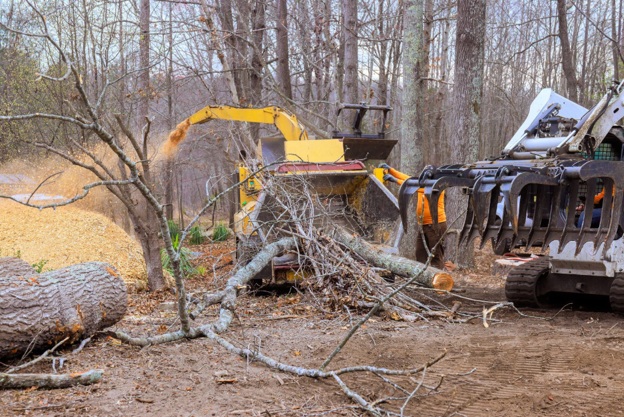
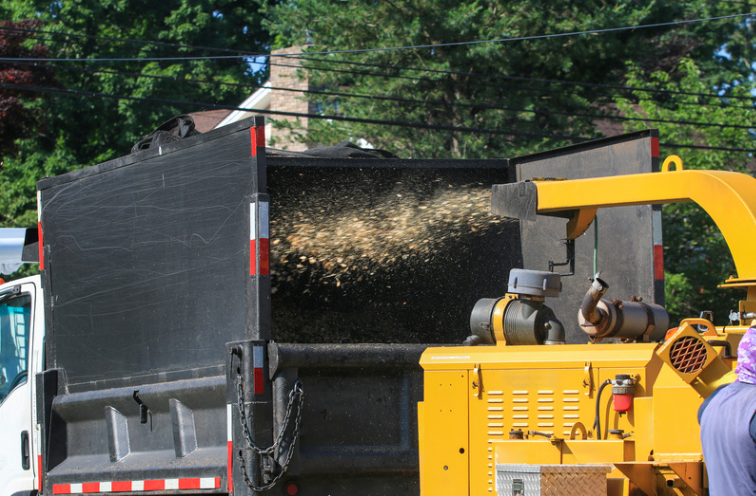
- Wood chips are chunks of branches, bark, and wood processed through an industrial chipper right on the job site.
- Most tree crews haul chips off by default, but you can almost always ask to keep a pile on-site instead. Just say so before the work starts.
- Chips shine as mulch, in garden beds, on paths, on hillsides for erosion control, and as a carbon-rich add-in for compost.
- Fresh arborist chips are not the same as the fine, dyed bark mulch in bags at the garden store, and the way you use them matters.
- Keeping chips on-site can support fire-wise landscaping, water retention, and slope stability, which all matter in Sonoma County.
Fresh Arborist Chips vs. Bagged Mulch
Wood chips are pieces of branches, bark, leaves, and small trunk sections run through an industrial chipper on site. The result is rougher and chunkier than the bagged bark mulch at the garden store, and that’s a good thing.
Fresh arborist chips:
- Hold together well and break down slowly
- Include a mix of wood and green material that feeds the soil as they decompose
- Last longer in the yard than fine, dyed bark mulch
Keep or Haul Away? Decide Before the Crew Leaves
Before the chipper starts running, take a quick look around your property and figure out if you have a use for the chips. A single mature oak or eucalyptus can produce several cubic yards.
A few questions worth asking yourself:
- Do you have garden beds, tree wells, or slopes that could use mulch?
- Is there a shady out-of-the-way spot where a chip pile can sit for a few weeks while you work through it?
- Would neighbors or friends want some?
If the answer is no across the board, ask the crew to haul it. If it’s yes, mention it before the job starts so the crew can drop the chips somewhere that works best for you.
Mulching Around Trees and Shrubs
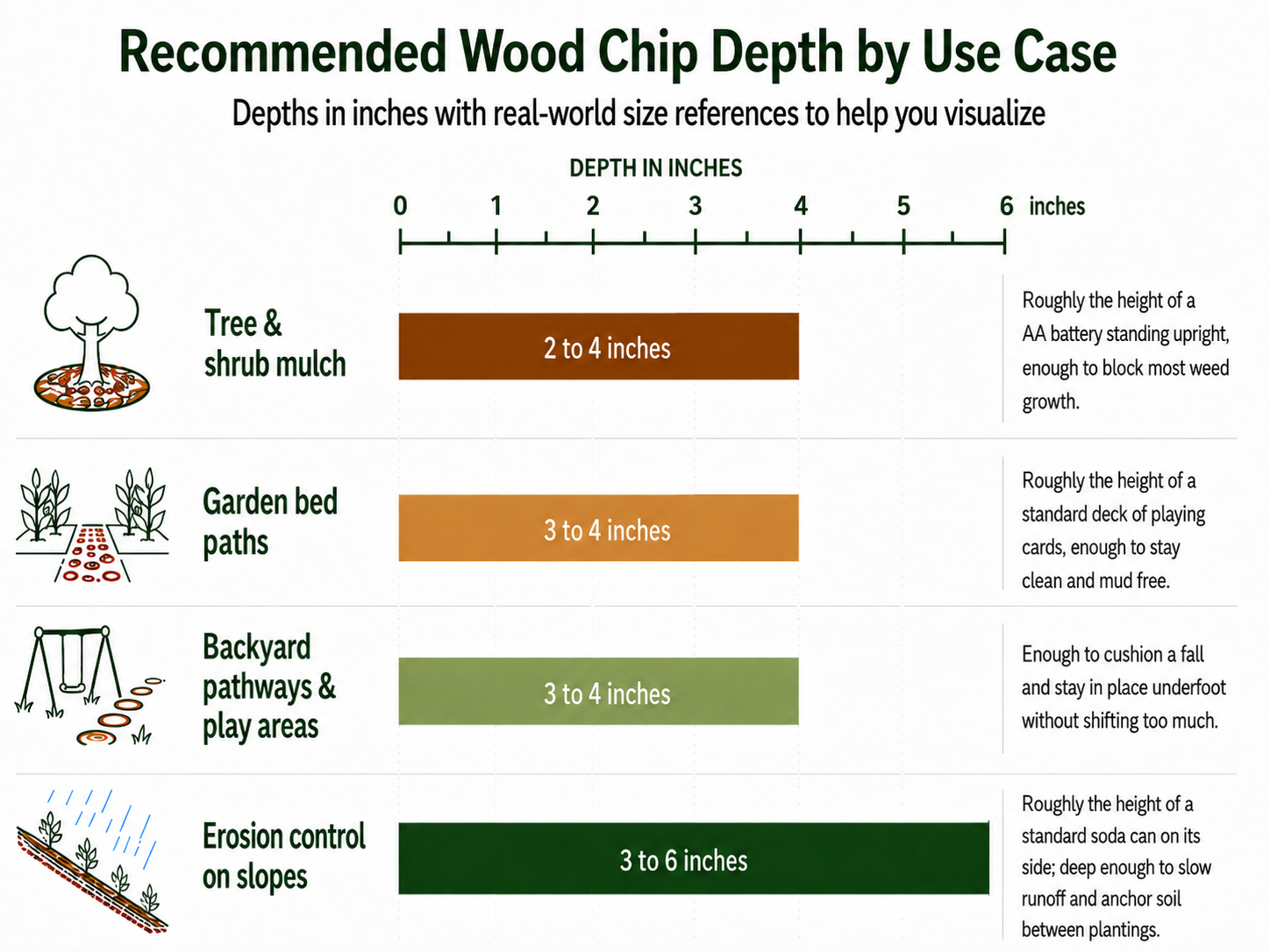
Spreading chips as mulch is the simplest, best thing you can do with a pile. A 2 to 4 inch layer around trees, shrubs, and ornamentals will:
- Hold moisture in the soil (huge during dry Sonoma stretches)
- Keep the soil cooler in summer and warmer in cold snaps
- Block most weed growth
- Slowly feed the soil as the chips break down
Keep the chips a few inches back from the trunk of any tree or shrub. Piling mulch right against the bark traps moisture and can rot the base of the plant. Think flat donut, not volcano.
Garden Beds: What Works and What to Watch For
Fresh chips are fine on top of ornamental beds right away. Vegetable beds need a little more thought:
Age chips 6 to 12 months before mixing them into vegetable soil. Fresh chips can tie up nitrogen and slow plant growth.
Not ready to wait? Spread chips in the walking paths between rows instead. By next season, the chips at the edges will have broken down enough to fold into the beds.
Pathways, Play Areas, and Yard Zones
Chips make a soft, natural path material for side yards, garden trails, and shaded walking areas. A 3 to 4 inch layer over a weed barrier lasts a couple of seasons before it needs a touch-up.
They also work great under swing sets and play structures. Chips cushion falls better than bare dirt. If you already have chips from a Sonoma County Tree Removal, you’re ahead of the game.
Dog runs and high-traffic zones will compact and thin out faster, so plan to freshen those spots once a year.
Erosion Control
Plenty of Sonoma County properties sit on hills, and bare soil on a slope can become a real problem once the winter rains show up. Wood chips hold the soil in place while new plantings get their roots down.
For a slope, spread chips 3 to 6 inches deep. On steeper grades, staking down a jute or coconut fiber blanket first and then topping it with chips gives the best hold. The chips:
- Slow the water
- Cut runoff
- Give new roots time to spread
Chips won’t fix an actively failing slope. Cracks, slumping soil, or new pooling water point to a drainage or grading problem that needs a professional inspection.
Building Better Compost
Fresh wood chips are a strong source of carbon, which balances out the nitrogen from:
- Kitchen scraps
- Grass clippings
- Green garden waste
A good compost pile needs both. A few nice benefits chips bring to compost include:
- Better airflow through the pile, which speeds decomposition
- Structure, so the pile doesn’t collapse into a wet, matted mess
- A richer, more balanced finished compost for your garden
An easy ratio to start with: 3 parts wood chips (carbon) to 1 part green material (nitrogen), by volume.
Keep the pile moist, turn it every few weeks, and you’re looking at usable compost in 6 to 12 months.
Common Mistakes to Avoid
- Piling chips against tree trunks. Leads to rot and pest problems.
- Using fresh chips as topsoil in a vegetable bed. Age them first.
- Spreading chips over established weeds without pulling them. Chips suppress seeds, not deep roots.
- Leaving a giant pile on the lawn. It kills the grass underneath in a few weeks.
- Forgetting fire clearance zones. Deep chip layers within 5 feet of the house work against defensible space.
Keep those first 5 feet around a structure free of combustible mulch.
Talk to a Local Tree Care Team
If you’ve got a tree that needs to come down, or you’re just trying to figure out the best use for the chips after the work is done, the family-run team at Sam’s Tree Service is happy to walk you through it.
Fully licensed, insured, and bonded, with a qualified arborist overseeing the work and Cal OSHA certification for jobs near power lines.
Call (707) 293-6930 or contact us online to schedule an estimate. Our crew serves homeowners across Sonoma and Marin Counties.
Frequently Asked Questions

Owner / Operator, Sam’s Tree Service
Sam Garcia, owner of Sam’s Tree Service, founded his company in 2019. However, the roots of the business go much further back to Sam Senior.
With over 30 years in the tree business, Sam Senior was employed with a large well-known tree company where he gained deep experience working with a power line contractor.
Today, Sam’s Tree Service is a father-son business with full family involvement that combines family values and local commitment with friendly customer service.
With a qualified arborist to oversee the work, customers count on Sam’s for broad expertise with trees, from trimming and pruning to removal, emergency tree services and more. In addition, both Sam Senior and Junior have power line experience, which is essential for any tree work that is in or immediately adjacent to power lines.