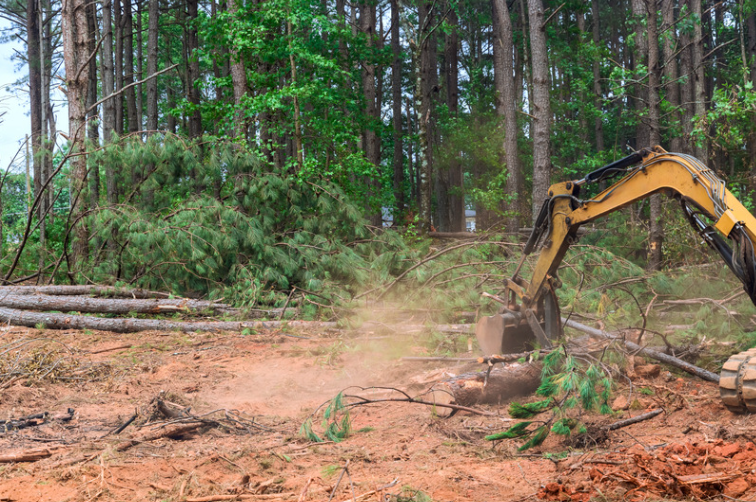

If you’re a homeowner or property owner looking at an overgrown lot and thinking, “We need to clear this… but do I need a permit?”—you’re not overthinking it. In Marin County, permits can pop up faster than people expect, especially when trees, slopes, creeks, or the Coastal Zone are involved.
And here’s the thing we see all the time: most people don’t mind doing the “right” paperwork—they just don’t want to waste time, start the job, and then get hit with a stop-work notice.
So let’s keep this simple and practical.
Below are some quick tips to help you figure out whether you might need permits before you hire land clearing services in Marin County.
Clarify if Your Property is in a City or an Unincorporated Community
This sounds boring, but it changes everything.
- City property usually means city rules and city planning/building counters.
- Unincorporated property usually means County rules, and you’ll often deal with Public Works and/or County planning.
Same zip code doesn’t always mean the same rules. If you’re not sure which you are, your parcel information usually tells you, or you can confirm with the local planning counter.
Land Clearing Vs. Grading
A lot of homeowners picture land clearing as just removing dry brush.
When your project includes things like:
- Cutting into a slope
- Building up a pad
- Moving dirt around the property
- Shaping a driveway
- Stock piling soil
…it starts drifting into grading territory.
Your County’s Public Works office should list situations where a grading permit may be required, including vegetation removal on steep slopes and work near watercourses.
Making Substantial Changes?
If your clearing job involves serious earthmoving (not just a rake-and-haul cleanup), you should assume the County may want a closer look.
Marin’s grading permit guidance calls out thresholds and triggers related to substantial changes to land and vegetation.
If you’re hiring equipment because it’s too big to do by hand, that’s your cue to at least check whether a permit applies.
Driveways and Access Routes Are Permit Magnets
Homeowners often say:
“We’re just clearing a path.”
And then that path becomes a future driveway, access road, or fire road.
Your County’s permit page should specifically list permit triggers tied to roadway/access work and other land-altering activities.
If your land clearing plan includes a new route for vehicles, it’s worth verifying requirements up front, especially if you’re working on a hillside or extending an existing drive.
Slopes Change the Rules
If you’re clearing a big area on a hill, this is where permits often show up.
Marin County’s grading permit guidance lists removal/plowing under/burial of over 10,000 square feet of vegetation on slopes exceeding 15% as a permit trigger.
If you’re clearing a big hillside section, don’t guess; check for permit requirements and regulations.
Check if Your Property is Near Water
This is a big one. Even seasonal creeks and drainages can be treated seriously.
Marin’s grading guidance includes work within/along banks of a watercourse and within certain distances from the top of bank as a permit trigger.
On top of that, the California Department of Fish and Wildlife (CDFW) may require a Lake and Streambed Alteration (LSA) Agreement when activities could substantially alter a river, stream, or lake and may adversely affect fish or wildlife resources.
If your “clearing” involves a creek crossing, culvert work, bank cleanup, or pushing material near a channel, it’s important to ask your county about permits and regulations.
If You’re in a Coastal Zone, Assume You Need a Permit
West Marin and coastal areas can come with different rules than inland neighborhoods.
Most development projects within the coastal zone require a Coastal Permit, with some categories potentially qualifying for “categorical exclusions.”
Marin County’s own “Tree and Vegetation Removal in the Coastal Zone” guidance explains that removal/harvesting of “major vegetation” can require Coastal Development Permit (CDP) approval, including heritage trees, visually prominent vegetation, sensitive species, vegetation near coastal bluffs, or vegetation in/near environmentally sensitive habitat areas (ESHA).
If you’re looking to hire professional land clearing services in Marin, contact your County for required permits and regulations.
Tree Removal May Need Its Own Permit
This is where many homeowners get surprised.
Marin County’s Tree Removal Permit regulations state that a permit is required in several situations, including:
- Removing more than two protected trees from a developed lot in a 12-month period
- Removing a heritage tree
- Removing protected/heritage trees in certain sensitive areas (stream/wetland conservation areas)
- Any removal of protected trees on a vacant lot (plus other conditions)
It also states that Marin’s native tree ordinance does not apply in the coastal zone, but a Coastal Permit may instead be required for removal of trees/vegetation there.
If your project includes oaks, redwoods, bays, willows, firs, etc., it’s smart to confirm whether they qualify as protected/heritage trees.
Do Not Rush the Permit Process
Permits often go sideways for one reason: incomplete submittals.
Grading permits can involve plan review and additional requirements depending on the job.
Tree removal permits may require a vegetation management/landscaping plan and replacement considerations.
A good contractor doesn’t just “show up with equipment.” They help you define scope clearly so you can submit what the County/city actually needs.
What to Do for a Smooth Permit Process
If you’re planning to hire land clearing services in Marin County and you want to avoid surprises, here’s a simple next step:
- Outline your goal (fire safety/defensible space, ADU pad, access, view clearing, brush cleanup, etc.)
- Mark the area you want cleared (even a rough sketch helps)
- Note what’s nearby: slopes, creeks, wet spots, and major trees
- Confirm jurisdiction (city vs unincorporated county)
- Do a quick permit check with the right office if any triggers show up
- Schedule the work with a crew that can operate within permit requirements
Our team at Sam’s Tree Service can walk the property with you, talk through the plan, and help you understand what typically requires permits, so you can move forward with confidence.
To schedule your free estimate, contact us online or call Sam’s Tree Service at (707) 293-6930 today.

Owner / Operator, Sam’s Tree Service
Sam Garcia, owner of Sam’s Tree Service, founded his company in 2019. However, the roots of the business go much further back to Sam Senior.
With over 30 years in the tree business, Sam Senior was employed with a large well-known tree company where he gained deep experience working with a power line contractor.
Today, Sam’s Tree Service is a father-son business with full family involvement that combines family values and local commitment with friendly customer service.
With a qualified arborist to oversee the work, customers count on Sam’s for broad expertise with trees, from trimming and pruning to removal, emergency tree services and more. In addition, both Sam Senior and Junior have power line experience, which is essential for any tree work that is in or immediately adjacent to power lines.